🌿 Garden Efficiency 101: How to Grow More with Less Space and Time
Modern gardening is evolving rapidly. It’s no longer just about planting seeds and hoping for the best — it’s about strategic, data-driven growth. Gardeners everywhere are learning how to maximize yield, reduce effort, and use every inch of space wisely.
Whether you’re growing food in a small urban balcony or managing a spacious backyard, understanding garden efficiency is the key to transforming your gardening results. This guide will help you learn how to grow more with less space and time — while keeping your garden sustainable and enjoyable.
🌻 1. What Is Garden Efficiency and Why It Matters
Garden efficiency means achieving the highest possible output — in yield, health, and satisfaction — from the least amount of input.
It’s not about growing hundreds of plants. It’s about creating a balanced, optimized ecosystem where every plant supports the other, every drop of water counts, and every square foot produces value.
The three foundations of efficient gardening:
- Space Optimization: Designing layouts that use every corner intelligently.
- Time Management: Reducing repetitive tasks through scheduling and automation.
- Resource Efficiency: Saving water, energy, and materials while maintaining healthy growth.
A well-planned garden not only produces more food and flowers — it also saves you time, money, and frustration.
🪴 2. Smart Planning – The Blueprint of Efficiency
Every efficient garden begins with strategic planning. Before touching the soil, visualize your goals.
Ask yourself:
- How much space do I really have?
- What crops or plants do I use most often?
- How much sunlight reaches each part of the area?
- Can I combine certain plants to save space?
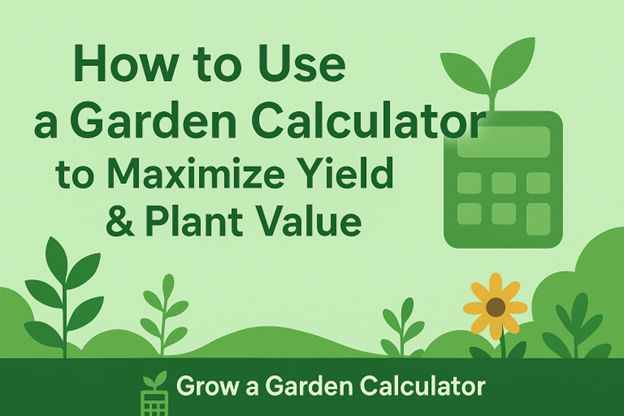
Tools like the Grow a Garden Calculator help you map your garden virtually. You can calculate how many plants fit within your available area, compare different layouts, and predict which combination of plants yields the best results.
This planning stage is where you turn guesswork into strategy — saving you weeks of trial and error later.
🌾 3. Space Optimization: Growing More with Less
If you want to increase yield without expanding your space, you must think three-dimensionally.
💡 Techniques for maximizing space:
- Vertical Gardening: Grow upward with trellises, stacked planters, and wall systems. Perfect for cucumbers, beans, peas, and strawberries.
- Intercropping: Plant fast-growing crops like lettuce between slower crops such as tomatoes or peppers.
- Square Foot Gardening: Divide raised beds into equal sections and assign each one specific plants based on size and compatibility.
- Succession Planting: Once a crop is harvested, replant immediately to ensure the soil is never left bare.
These techniques don’t just increase productivity — they create visually stunning, layered gardens that thrive efficiently.
🌸 4. Efficient Watering and Soil Management
Water is one of the most important (and often wasted) resources in gardening. Efficient gardeners know that watering smarter makes a huge difference.
✅ Best practices:
- Use drip irrigation systems or soaker hoses that deliver water directly to roots.
- Water early in the morning to reduce evaporation.
- Collect rainwater in barrels to cut down on municipal water use.
- Mulch heavily around plants to retain moisture and prevent weeds.
Meanwhile, your soil is your garden’s foundation. Feed it like a living system:
- Add compost to boost microbial activity.
- Rotate crops annually to avoid nutrient depletion.
- Test your soil’s pH and adjust accordingly.
Healthy soil retains water and nutrients better, reducing the need for constant attention.
⏰ 5. Time-Saving Techniques for Busy Gardeners
Time efficiency doesn’t mean cutting corners — it means being smarter about what you do.
Here are several ways to save time while keeping productivity high:
- Automated Watering: Install timers or smart irrigation systems.
- Use Raised Beds: They minimize weeding and improve drainage.
- Choose Perennial Plants: Herbs, berries, and asparagus return year after year.
- Batch Tasks: Do watering, pruning, and harvesting in focused blocks instead of scattered moments.
- Use Tools Strategically: Keep your essential tools nearby and invest in quality equipment to reduce effort.
By combining structure and routine, you’ll spend less time managing your garden and more time enjoying it.
🌿 6. Companion Planting and Natural Balance
Companion planting is one of the most efficient and sustainable methods to enhance productivity. It involves pairing plants that benefit each other.
Popular combinations:
- Tomatoes + Basil: Basil repels pests and improves tomato flavor.
- Carrots + Onions: Onions deter carrot flies.
- Corn + Beans + Squash (The Three Sisters): Each supports the others’ growth.
Companion planting reduces the need for chemical pesticides and fertilizers while boosting yield naturally.
With the Grow a Garden Calculator, you can test these combinations and find which ones produce the best results for your climate and soil.
🌱 7. The Role of Technology in Garden Efficiency
The digital age has transformed gardening. Smart tools can now predict, measure, and optimize almost every aspect of your garden.
For example, Grow a Garden Calculator allows you to:
- Input your available space and soil data.
- Compare different plant combinations.
- Analyze yield potential before planting.
- Adjust layouts to maximize light and airflow.
Data-driven gardening isn’t about removing creativity — it’s about empowering you with insights so you can make the most informed decisions possible.
🌳 8. Sustainability and Eco-Friendly Gardening
True garden efficiency also means sustainability — creating systems that benefit the planet as much as they benefit you.
Sustainable efficiency tips:
- Compost all organic waste to enrich your soil naturally.
- Use biodegradable pots or recycled containers.
- Plant native species that thrive without excessive watering or fertilization.
- Attract pollinators like bees and butterflies with flowering plants.
- Reuse greywater (from rinsing vegetables or rain collection) for non-edible plants.
An efficient garden is self-sustaining — it gives back to nature instead of taking from it.
🌼 9. Measuring and Tracking Your Garden’s Performance
To improve efficiency, you must measure results. Keep a garden journal or use an app to record:
- Planting dates
- Weather conditions
- Yield quantity
- Water usage
Analyzing these records helps you identify patterns — for instance, which plants thrived with less sunlight or which fertilizer improved yield most.
With consistent tracking, you’ll learn to refine your gardening plan season after season — achieving maximum efficiency over time.
🌻 10. From Hobby to Smart System: The Future of Gardening
Efficient gardening is more than just a trend — it’s the future. As climate change and urban living challenge traditional agriculture, home gardeners play a vital role in creating sustainable food systems.
By using smart tools like Grow a Garden Calculator, you’re not only improving your own harvest — you’re contributing to a global shift toward smarter, greener, and more efficient food production.
Want to learn How to Ultimate Strategy Guide to Level Up Faster. We have got it covered for you.
🌿 Final Thoughts
You don’t need a massive backyard or endless free time to enjoy gardening. With the right strategies — from vertical layouts to smart calculators — you can grow more food in less space and less time than ever before.
Efficiency doesn’t mean rushing; it means designing a garden that works with you, not against you. Start small, plan wisely, and let technology and nature collaborate for a thriving, balanced garden.
Use the Grow a Garden Calculator to plan your next efficient garden today — and watch your results multiply with every season.
One Comment